Showing posts with label Grace Kelly. Show all posts

Friday, November 1, 2013

47 - Monaco, Mirage and Reality ... and Grace Kelly


THE METROPOLE,  THE HOTEL DE PARIS  and THE HERMITAGE: Monte Carlo


Lobby of the Hotel Metropole, September 2013

     I have never been a big fan of the Principality of Monaco, that little kingdom just a few miles from Nice which was put on the map for most Americans by the actress Grace Kelly almost 60 years ago.

Monaco is to my eyes one of the great myths.   I think to most Americans it is perceived as a rather undefined, romantic, glittering jewel somewhere in the Mediterranean.  In reality, it is a bit of all the aforementioned, but also an inordinate amount of high rise buildings squeezed into less than one square mile.  Everything seems unreasonably expensive, and nothing any prettier than the rest of the French Riviera.  Its charm depends pretty much on exactly where you find yourself and how much money you wish to spend for the privilege of being there.

Vintage photo of overgrown Monaco (Google)

Still, for a hotel buff like myself, Monte Carlo (Monaco's only city) does have some world renowned luxury hostelries.   I've never stayed at any, but I have done my share of strolling through the lobbies of the Hotel de Paris (generally thought to be the snazziest, though the day I last walked through, it had the ambiance of a crowded train station), the Hermitage and the Metropole.   Each of these top three have award-winning restaurants.

Plenty of Ferrari at Hotel de Paris
  The Louis XIV restaurant at the Hotel de Paris is the most famous and has garnered the top accolade of three stars from the French bible of gastronomy, the Michelin Guide.   It is also the most expensive, and is in fact so far out of the ballpark by my standards that I have never been tempted to make the sacrifice.

We intended to celebrate at the Hermitage's restaurant, Le Vistamar, on my last birthday, and  had reserved a beautiful table on their terrace overlooking the port.   When time came to order, however, we were peremptorily informed that due to some unconvincing circumstances, the prix-fixe menu had been canceled.   So exit the Pleasants-Paladinis.   We will never know what we missed.

A stroll through the Hermitage

We did lunch recently at the Metropole's starred restaurant; it was delicious as well as elegant, and the special midday menu was, in fact, wonderful value for money.

  A tuna and eggplant terrine to start a memorable lunch

 at Joel Robuchon's restaurant in the Metropole Hotel


Whenever I partake of an exquisite meal, it inevitably puts me into a kind of glowing mood.  In the case of Monaco, it allows me a certain indulgence.  Let's just say that after a supremely satisfying gastronomic tour de force at the Metropole, with its perfect service, refined decor and view of the Mediterranean Sea, I tend to recognize a bit more charm in this tiniest of all countries.

* * * * * *

When the late Prince Rainier announced his intention to wed Grace Kelly in 1955, most Americans had never heard of Monaco.   I once read a survey in, I think, Time Magazine in which over 50 percent of those questioned thought Rainier was the king of Morocco, and few of the remaining polled actually knew on which continent Monaco was located. 

The wedding 1956 (photo AP)

I remember the year of the royal wedding (which created probably the first international press frenzy of the TV age) as television and written press from all over the world pushed and shoved their way into the miniature kingdom to record the event.   Make no mistake about it, they were not so very interested in Prince Rainier or his stern-looking family.  The excitement was all about the arrival of Grace Kelly, who was already internationally known as Hollywood's most beautiful, most talented, most regal.

As she began to find her footing within the complex world of the palace and establish herself in Monaco, some of the American press tended to make fun of what it perceived as the parvenu  princess' increasingly British accent and  grand manners.

For the French press, however, she could do no wrong.  They pretty much gave her credit for putting the class back into the Grimaldi royal family.  At the time of her arrival, Monte Carlo was very much on the skids.   Unsavory international elements had increasing control of the city-nation's financial institutions and tourism was in a downhill spiral.  French President Charles de Gaulle was growing impatient with the country's lax immigration controls and money laundering scandals.  He was seriously threatening to revoke the country's independence, and there were even hints of deploying the army.

It was a surprise my first trip to the south of France to discover that Monaco was not an island, but just a natural extension of the French hexagon in every way other than its charter of independence.

Its sovereignty has depended for the last hundred years or so on relatively short-term agreements with France allowing it certain advantages (such as the all important no-taxation treaty), while assuring various privileges including French military protection.

De Galle had a conflictual relationship with the personality-challenged Rainier.  Many historians feel that the French president's contact with the personable Grace was fundamental in defrosting tensions between  the two governments.  The former actress's arrival, because of her international popularity and her talent as a good-will ambassador, coincided with an important increase in American and British tourism which helped save her adopted country from bankruptcy.

Revered by her Mediterranean countrymen, both in Monaco and France, for her beauty and her charm, as well as some legendary kindnesses, Grace's 1982 death following an automobile accident at the relatively young age of 52 assured her enduring legend and guaranteed her popularity in Monaco for generations to follow.

Mystery lady checking out the Hotel de Paris, Monte Carlo


SIDEBAR:  More about Grace

Pre-Monaco Grace (photo Life Magazine)


I had a client-friend in the 1970's, whom I originally knew in North Carolina, and after retirement he was appointed director of the American School in Paris.  Princess Grace was on the school's board and she had been instrumental in raising considerable funds.

Bill swore by her, and he said everyone on the board had pretty much fallen in love with her.  He said she repeatedly reminded board members to call her by her first name, and took obvious pleasure in going around the corner to the neighborhood cafe on Avenue Bosquet with the others after each meeting.

* * * * * *


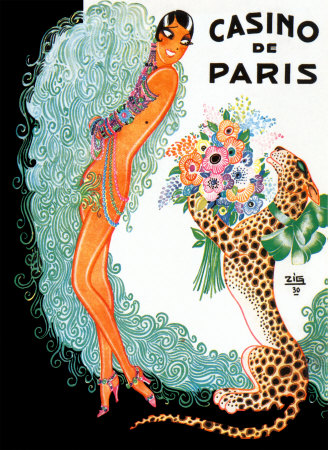
Vintage Baker poster
  When Josephine Baker (the black singer originally from St. Louis who became a music hall superstar in France) fell on hard times in her declining years, she turned to her friend Grace who installed her and her large family of adopted children in a comfortable property in the South of France.

The day of Baker's death, the week of a triumphant comeback on the Paris stage, Grace had spent most of the afternoon visiting with her compatriot in her dressing room at the Bobino Music-hall. 


 * * * * * *

Beseeched by Alfred Hitchcock to star in the film "Marnie" in the early 1960's, Grace first thought it possible.  Rainier was not in agreement,  but she stood her ground and officially announced her desire to return to Hollywood for one film, adding that all compensation would be donated to Monegasque charities.

Alas, there was a loud public outcry in the tiny constitutional monarchy.  An official survey revealed an overwhelming majority of Monaco citizens were vehemently against her return to acting, however briefly.

It was reported to have broken her heart, but Grace accepted the inevitable and renounced a screen comeback.  For the rest of her life, the popular princess confined her artistic endeavors to poetry readings and pressed flower arranging.  

With Hitchcock on the set of "To Catch A Thief"


Your input is welcomed:  hotel-musings@hotmail.fr

 [Photos are mine, unless otherwise credited]


CROSS REFERENCING … a look at other postings
Grace Kelly was also mentioned in musing No. 35, "Hollywood on the Hudson" and musing No. 20 "Decaffeinated coffee ... in Hungarian?(to access, click on titles) .


Friday, May 3, 2013

35 - Hollywood on the Hudson


THE WYNDHAM, New York City


The old  Wyndham on West  58th Street, fronting the back of the Plaza, was in some ways my favorite New York hotel.  Though certainly never one of the most luxurious, and by the time I arrived it had decidedly known better days, it remained wonderful value for money.

For the price of an inexpensive room elsewhere, the Wyndham had some knockout suites.  Opened in 1929, the hotel’s golden era was the 1950’s.  New York was then the television capital of the world, and the Wyndham welcomed some of the new medium’s most sophisticated ladies and gentlemen, often for prolonged stays

Until its demise in 2005, it continued to maintain a crew of elevator operators for its antiquated lifts.

Meadows (Scott Allen photo)
 Danny was a little bit slow, very friendly and much beloved by many returning clients.   I once observed the actress Jayne Meadows in an animated conversation with him.  She was wearing the biggest dark glasses imaginable, the kind Cadillac might produce if they were in the sunglasses business.


“But Danny, concentrate, you’ve got to concentrate.  I left my suitcase with you last month.  Now you must find it.  Do try to concentrate, Danny.”  She enunciated each word as though projecting to the last balcony.  I hope he did remember.

Rarely has such a simple and little known hotel played host to quite such an impressive array of film and theatre luminaries.  

Laurence Olivier first stayed at the Wyndham in 1976 during the filming of "Marathon Man", a spy drama directed by John Schlesinger and co-starring Dustin Hoffman.  Dick Cavett interviewed him there from suite 1401.  

Hackman and smiling wife (Google)
 I ran into Gene Hackman several times, usually in the elevator.  He always spoke and smiled as though we were old friends.  He was invariably with an asian woman I assumed to be his wife.  She neither spoke nor smiled.  John Cassavetes introduced Peter Falk and Ben Gazzara to the hotel.  
Tandy and Cronyn (Google)


 Jessica Tandy and husband Hume Cronyn had their New York  apartment in the Wyndham.  On the week of Miss Tandy's death the lobby was filled with flowers, mostly roses, of condolence.  


 Grace Kelly lived in the Barbizon for Women when she first moved to New York in the late forties to seek a career on the stage; but she too had regular contacts with the Wyndham, as her favorite uncle, playwright George Kelly, often stayed there.  In later years, Princess Grace owned a smallish pied-à-terre around the corner on Park Avenue, and she sometimes put guests up at the Wyndham.   
    

Early Grace (photo by Life)

  Ingrid Bergman stayed several weeks in 1982.  Dying of cancer, she came to New York to celebrate the 30th birthday of her twin daughters, Isabella and Ingrid Rosellini.

Arlene Dahl (left), Ben Gazzara and Wyndham owner Suzanne Mados (N.Y. Social Diary)

It was a family owned enterprise, and the proprietors, John and Suzanne Mados, had some solid connections in the show business world.  He sometimes gave cocktail parties across the street at the Sherry Netherlands, with various film luminaries from the fifties, faithfully reported by Liz Smith in her column.  Piper Laurie and Jane Powell always seemed to be in attendance, as were often Arlene Dahl and Gena Rowlands.

The Redgrave-Neros (AP)
 I once saw Vanessa Redgrave arrive with her ex and future companion, Franco Nero, to visit their daughter who was staying there.  The lobby was European shabby-chic, the guests were somewhat the same, and no one other than myself seemed to give the Redgrave-Neros so much as a passing glance.

Around 2000, I had a client who ran a shop in Bergdorf Goodman’s next door.  She was a bit eccentric (not to say that I am not) and perhaps a little snobby (some say I am, but I am not).  I was afraid she’d be put off by the kitsch decor, but I nevertheless invited her by for a meeting.  She was absolutely enamored of the place, and I was bursting with pride as she covered me with compliments for uncovering such a funny little gem.

Jane in  suite 804, summer of 2000


It was never perfect, you had to accept its terms:  no dial telephones,  no turndown service, and no fancy designer toiletries either. The Laurence Oliviers and Lena Horne had to make do like the rest of us with those little mini bars of Ivory soap.

At the very end there was talk of mice, but I never saw any.  At best it was an oasis of civility in a very quirky environment; at worst, settling into the 21st century, it was beginning to resemble a once perky old lady in the early throes of Alzheimers.   

Still, I’d love to be able to stay there again, just once more.

Suite 824, September 1990 (Photo Pascale Charmet)


 SIDEBAR:  What Next?

Vintage postcard of 5th Avenue at 58th Street

When the Wyndham finally closed shop in 2005, it remained vacant for some time.  This coincided with the lengthy closing and renovation of the Plaza across the street, so that part of 58th Street looked pretty lonely for awhile.

Around 2008 I noticed new life at Number 42.  At first it appeared to be just another apartment building, then I learned the site was sort of a hotel, though a very discreet one and with an emphasis on longer rentals than one or two nights.

Called the AKA, it was a new chain with five or six of its clubby branches scattered around the city.  Most of the accommodations were one bedroom apartments.

Otherwise, the AKA is run just like a luxury hotel with a particularly well trained and polished concierge staff.

I was intrigued.  Prices were flexible, according to season and availability, and for our next trip to New York we decided to give the AKA a try.   Despite my affection for the Central Park South location of the old Wyndham, we ultimately opted for the Sutton Place branch.  It was the only one with a pool, and the neighborhood was a new one to explore. 

I was about to discover another kind of lodging –half grand hotel, half apartment building.  When it works like it’s supposed to, you have the best of both worlds.

Stay tuned.

Sutton Place, Queensboro Bridge (Google photo)


 Your input is welcomed:  hotel-musings@hotmail.fr

Next Friday:  "The Good and the Bad ... Sutton Place AKA"

  [Photos are mine, unless otherwise credited]


Friday, January 11, 2013

20 - Decaffeinated coffee ... in Hungarian?


Behind the Iron Curtain, Budapest  


Grand Hotel Margitsziget (photo Danibus Hotels)

     The 1970’s saw the first signs of a warming behind part of the iron curtain when the most ingenious countries began to beckon to the international tourist and his dollars.

I had a childhood friend who became U.S. ambassador to Romania, and for a while I thought of going to Bucharest; but I was probably waiting for an invitation to the embassy residence which never materialized.  Then I briefly thought of going to Prague which has always been a popular destination with the French, but the political climate there was frequently too volatile for my timid tastes.

Life of the party (Tsar-Devica)
I am a little ashamed to admit that I ultimately opted for Hungary due to the fact that Elizabeth Taylor had recently given her much publicized 40th birthday celebration there.

I chose the Grand Hotel Margitsziget in Budapest (in English it’s generally called the Margaret), which I thought E.T. had commandeered for her party.  It was only later that I learned the Taylor shindig was in fact held at the Intercontinental.  Never mind, it was still the catalyst that got me to Hungary.

Vintage postcard of Margaret Island in 1929
Here I need to digress a little back to my first trips to Venice.

When I began traveling in Italy, I decided to make an effort to learn the language, and I made the acquaintance of a mostly out-of-work Italian actress whom I hired as professor.

My idea was to tape a maximum of phrases which I would play and replay with a kind of fanaticism for many months.  I had a precise idea of how and what I wanted to learn, and though it was in some ways effective, it was certainly not the most serious method.

Concentrating on hotel and restaurant vocabulary, I tried to memorize phrases intended to send out the image of a more worldly and less touristy tourist than I really was.

Having weathered the first years in France learning a new language, I well knew the importance of accent.  Extremely, perhaps excessively motivated, I would repeat my tapes morning, noon and night  for months before traveling.  Ultimately, what little I did speak, I managed rather brilliantly.

The downside was that the Italians I found myself in contact with invariably assumed I mastered their language far better than I did.  Also, having no grammatical formation to fall back on, I tended to forget everything about as quickly as I had learned it.

In the short term, however, the results were often spectacular.  If I found myself, say, in need of some salted peanuts and a non alcoholic red San Pellegrino (then a few seconds pause before adding) “…sensa limone, per favore,”      well, I could manage this exceedingly well.

Encouraged by my Italian success, I decided to do the same thing when Ann and I travelled to Hungary.  At Unesco, there were a number of Hungarians, and I finally cajoled one of them to assist me in recording a few phrases.

Hungarian was MUCH harder than Italian, and I concentrated all of my energy over the months preceding our trip to rehearsing a handful of idiomatic bits and pieces.  In addition to Hello, Goodbye, thank-you, and what a magnificent day it is (or alternatively, what a shame there is no sun this morning), I mastered a complicated order for Coca-Cola with a lot of ice and a wee slice of orange.  Another linguistic pièce de résistance was an order for a decaffeinated espresso with granulated sugar on the side.

Ann spoke quite satisfactory German, which was then much more useful in that part of Eastern Europe than either English or French.  Nevertheless, we agreed that I would attempt my Hungarian phrases as often as feasible.

The Széchenyi Restaurant slightly modernized today (google photo)


On the first dinner at the Margaret Hotel’s Széchenyi Restaurant, the waiter appeared appropriatedly impressed by my initial Hungarian phrases, and had managed to decipher everything through dessert.

When I requested the coffees (one normal and a decaffeinated, if you please!), my order was met with an oddly blank stare.  I repeated, enunciating each word carefully.  A polite look of utter bafflement.  Finally admitting defeat, I turned the task over to Ann who proceeded to finalize our order in German.

The young waiter had a surprising reaction.  He explained that he had perfectly well understood my Hungarian.  “I understand what you are saying,” he explained in German.  “It is just that I cannot imagine how one can possibly remove the caffeine from the coffee.”

My Unesco “tutor” had in fact left her native country and language before World War II.  Although she had translated my phrase into impeccable Hungarian, she hadn’t realized, herself, that decaffeinated beverages had yet to make their way behind the iron curtain.


SIDEBAR --More about the Margaret


Margaret Island 2006 (without the peacocks)

Hungary back in the iron curtain days was considered more open and westernized than most of the satellite countries, but only just.  I found Budapest extremely gray and uncared-for that first trip, and the people somewhat unwelcoming.  


As I said, my introduction to the Margaret was a case of mistaken identity, as I was sure it had been the site of the recent Burton-Taylor birthday affair.  Incidentally, their Intercontinental is now a Best Western, so it’s all quite relative.

The Burtons and Princess Grace in Budapest (photo tsar-devica)
If you are wondering what the Burtons and Princess Grace and the like were doing there in the first place, well, for economic reasons Mr. Burton was filming the undistinguished multinational  “Bluebeard” with a cast of international beauties, and Ms Taylor was there looking after her interests.  I seem to remember reading that the whole point of organizing the birthday bash (with 200 guests streaming in from all over the globe) was to relieve the monotony.


The Margaret was built 140 years ago on a beautiful island of the same name on the Danube separating the two cities of Buda and Pest.  Quite a number of handsome peacocks used to roam about, adding to the picturesque of the gardens.  (On a recent trip I saw no more peacocks, but the island was just as beautiful.)

I remember that the young waiter who served our coffee (with caffeine intact) was smiling and friendly; but if I recall so well, it is because he was about the only hotel employee who could have been so described.  Most of the personnel were efficient, and some were helpful; but I remember none other than the waiter ever returning a smile or as a general rule even making eye contact.

Many of the traditional Budapest hotels, like the Margaret, have always offered extensive spa facilities, cashing in on the area's "healing waters."   In the 1970's the Margaret’s spa clientele was mostly Hungarian, Russian or German.   In recent years, with the addition of an extensive medical programme of cosmetic surgery, Americans, British and even a few French have joined the generally overweight hotel guests availing themselves of the so-called beauty treatments.


A nearly unchanged Grand Hotel Margitsziget today
When I returned in 2006, I was curious to compare the differences.  I stayed again at the old Margaret, and found to my stupefaction that the hotel personnel behaved approximately the same as I had remembered –suspicious, curt and unsmiling.  Training might well have included the strict rule to never let slip any unnecessary “please” or “thank-you.” 


Budapest, itself, had changed spectacularly.  The gray of my memory had all but disappeared, but the hotel had not much evolved along with the new Hungary.  In fact, had I not known better, I would have sworn the same staff was holding down the fort 30-odd years on. 

P.S. While in Budapest in 2006 I did discover --thank goodness!-- the Gresham Palace, and that is quite another story.  Stay tuned.


Your input is welcomed:  hotel-musings@hotmail.fr
 
CROSS REFERENCING … a look at other postings
Richard Burton and Elizabeth Taylor were also featured in blog No. 39, "Living It Up On Park Lane"; Grace Kelly was mentioned in blog No. 47 "Monaco, Mirage and Reality"; Budapest in "An Encounter With Keith" in blog No. 29  (to access, click on above title).


Next Friday:  "The Paris Hiltons and the Ukrainian Mafia"


http://frankpleasants.blogspot.fr/2013/05/39-living-it-up-on-park-lane.html